A wood-fired soak starts with enough water and dry firewood. Follow the steps below to heat the tub safely.
Snorkel introduced its patented underwater wood stove nearly 50 years ago. The design puts almost the entire stove directly in the water, so heat transfers from the marine-grade aluminum stove body into the tub without a pump, external plumbing, electricity, or gas. Only the loading door, air intake, and chimney remain above the waterline.
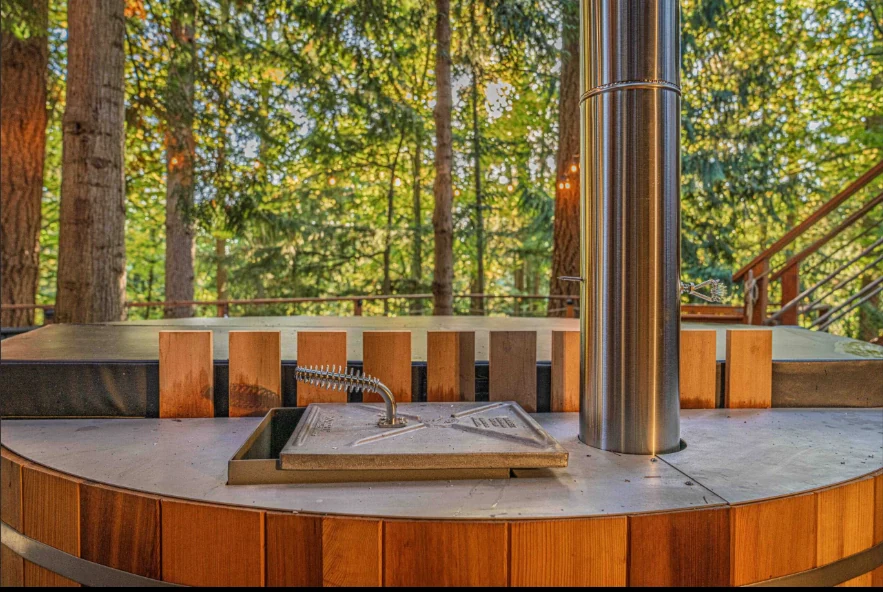

What is a wood-fired hot tub?
A Snorkel wood-fired tub heats water directly with an underwater stove behind a protective fence, without a pump, electricity, or gas. You need a sound, level foundation, water, dry firewood, and an installation that meets local wood-burning requirements. For a cold plunge, skip the fire.
The Snorkel underwater stove
Snorkel makes two sizes of underwater wood stove:
- The Scuba stove is a 60,000 BTU model used with many 4- and 5-foot tubs.
- The Snorkel stove is the larger 120,000 BTU model, standard with 6-foot and larger tubs and available for some smaller tubs when faster heating is wanted.
The larger stove heats roughly twice as fast as the Scuba. Because the stove is submerged, heat does not have to travel through a separate heat exchanger or loop of plumbing. The entire wetted stove surface transfers heat into the water.
The stove body is marine-grade aluminum with a protective powder-coated finish. With proper care, these stoves commonly last for decades. Some original Snorkel stoves are still in service.


Before you light the fire
Have these items ready:
- dry, split firewood cut to fit the stove: 21 inches long for a Scuba stove and 26 inches for a Snorkel stove
- kindling and a fire starter or plain paper
- long lighter or matches
- stove gloves
- ash scoop
- poker or other suitable stove tool
- floating or handheld thermometer
- clean paddle for mixing the water
- an insulated hot-tub cover, if you have one
A cover makes a noticeable difference. It holds heat in while the tub warms and shortens the wait, especially in cold or windy weather. Use only a cover intended for your tub, and keep it safely clear of the chimney and loading door.
Safety comes first
Read the instructions supplied with your own tub and stove before operating it. Installation details can vary, and local rules for clearances, chimneys, sparks, and wood-burning appliances apply.
Keep these basics in mind:
- Never light the stove before the tub reaches the required water depth. In a 3-foot tub, the minimum depth is 20 inches for a Scuba stove and 27 inches for a Snorkel stove. Add 12 inches to those depths in a 4-foot tub. A dry or partly exposed stove can overheat and be permanently damaged.
- Keep the protective stove fence installed while the tub is in use. Water nearest the stove can be hotter than the rest of the tub.
- Keep children supervised and away from the stove door and chimney. Children need lower water temperatures, generally 95–98°F or below, and children under five should generally avoid hot tubs.
- Do not enter water above 104°F. Pregnant people and anyone with a medical condition or medication that affects circulation or heat tolerance should ask a medical professional before using a hot tub.
- Do not soak while impaired by alcohol or drugs. Leave the tub if you feel dizzy, overheated, or unwell.
- Do not use the tub during an electrical storm.
- Never drain the tub while a fire, live coals, or a dangerously hot stove remains. Let the fire die completely and allow the stove to cool while it is still submerged.
- Do not throw water into a hot firebox. Rapid cooling can damage metal, and the added moisture makes the next fire harder to start.
- Never leave an active fire unattended.
How to heat a Snorkel wood-fired hot tub
1. Check the tub, stove, chimney, and water
Make sure the tub is on its intended level foundation and that the chimney, rain cap or spark-control components, stove fence, and door are correctly installed. Check the firebox and chimney for excessive ash, debris, or an obstruction.
Fill the tub to its normal operating level before lighting anything. In a 3-foot tub, the minimum water depth is 20 inches with a Scuba stove and 27 inches with a Snorkel stove. Add 12 inches for a 4-foot tub.
If the tub has just been assembled or allowed to dry, the cedar may need time to swell and seal. Small leaks during the first fill can be normal as the wood takes up water.
2. Put the cover on
Cover the tub before lighting the stove. Leaving the cover on while heating reduces evaporation and heat loss. Check that the cover has the correct clearance from the chimney and stove opening.
3. Start a small, airy fire
Clear old ash as needed so air can move through the firebox. Place loosely wadded plain paper or another approved fire starter in the stove, add dry kindling, and leave room between the pieces.
Light the fire and position the door for maximum draft as described in the stove instructions. Once the kindling is burning well, add split firewood gradually. Loading the firebox too quickly can smother a young fire.
Never burn painted, pressure-treated, glued, or chemically finished wood. Dry, clean firewood heats better and produces less smoke.
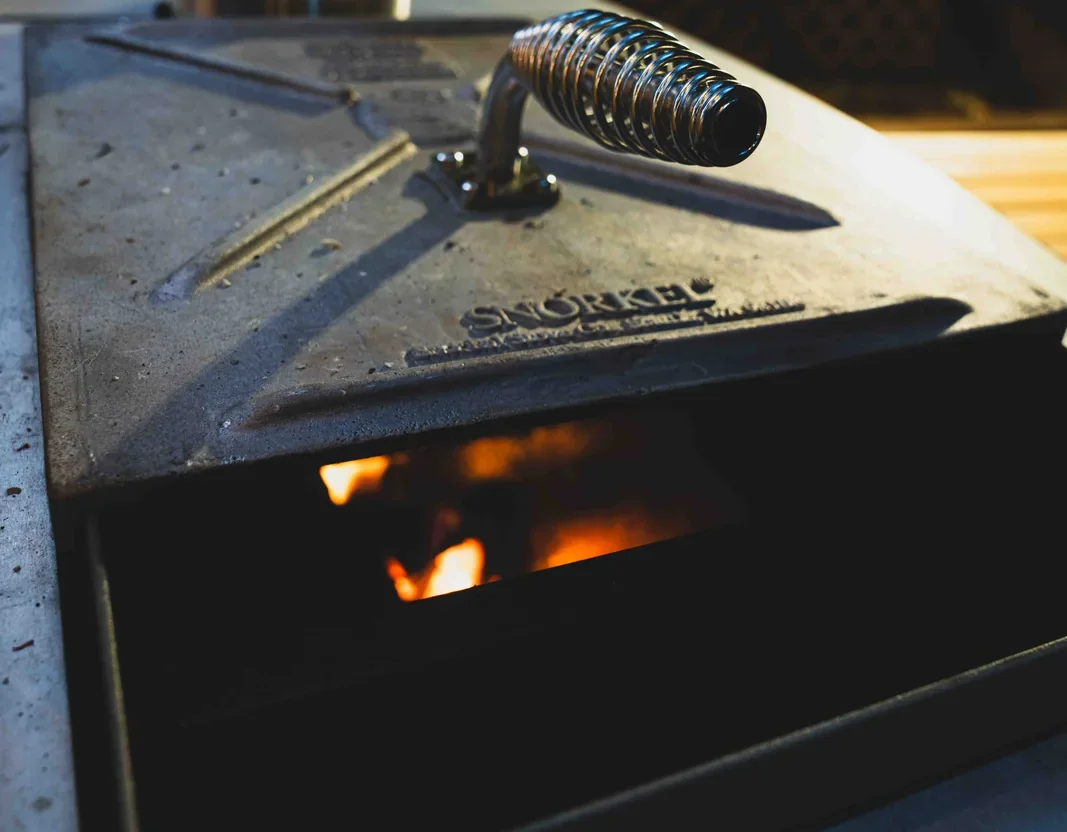
4. Build a hot, clean-burning fire
Once the fire is established, add enough split wood to produce a strong burn without packing the pieces so tightly that air cannot move around them.
Snorkel's door also controls the air supply. Sliding it to admit more air increases the burn; reducing the opening slows it down. A weak, smoky fire usually needs drier wood, more draft, a clearer ash path, or more space between the pieces.
Softwood generally comes up to temperature quickly. Dense hardwood tends to burn longer. What matters most is that the wood is dry.
5. Mix the water and check the temperature
Water closest to and above the stove heats first. Use a clean paddle to mix the tub thoroughly before taking a temperature reading. Otherwise, a thermometer near the surface or stove may give you a misleading number.
Check the temperature regularly. Heating time varies with your setup and conditions; use Snorkel's heating-rate guide to estimate it.
6. Back off before you reach soaking temperature
A wood fire does not stop producing heat the moment you close the draft. The stove and bed of coals still hold energy.
As the water approaches your preferred soaking temperature, stop adding full loads of wood and reduce the airflow. Make smaller adjustments and mix the water before every reading. First-time users often wait too long to slow the fire, then sail past a comfortable temperature.
If the water becomes too hot, do not enter. Mix it thoroughly, let the fire die back, remove the cover, and add cold water if needed.
7. Soak and maintain gently
Many adults prefer water around 100–104°F, though a cooler tub can be more comfortable for a longer soak. Once you are in, the heat from the bathers and a small bed of coals may be enough. Avoid feeding a large fire while people are soaking.
Keep the stove fence in place. Periodically mix and check the water, especially after adding wood. Stay hydrated and get out if you feel overheated.
8. Let the fire die before draining
When the soak is over, reduce the air supply and allow the remaining wood and coals to burn out naturally. Keep the stove submerged until the fire is out and the stove has cooled.
When several people leave the tub, the water level drops as their displacement is removed. If it falls below the stove’s minimum operating depth, immediately add water to restore it. Never operate the stove below its minimum water level.
Do not drain a wood-fired tub with a live fire or hot stove. If necessary, leave the water in overnight and drain or service the tub the next day.
Once everything is cool, remove ash with the scoop and store it in a noncombustible container with a tight lid. Coals can remain hot long after they appear dead.
Common first-timer mistakes
- Lighting too soon: confirm the required water depth first.
- Using damp or oversized wood: start with dry, split wood.
- Choking the fire: leave air paths and clear excess ash.
- Measuring without mixing: mix first, then measure away from the stove.
- Slowing down too late: ease off before reaching soaking temperature.
- Draining too soon: keep the stove submerged until the fire is out and the stove has cooled.
Explore Snorkel wood-fired hot tubs or compare heating rates by tub size.
---