
A heat pump can reduce the electricity needed to keep a hot tub warm, but it costs more to buy and takes more planning to install. Whether it pays for itself depends on your utility rates, climate, tub and how you use it.
How a heat pump heats—and cools—your tub
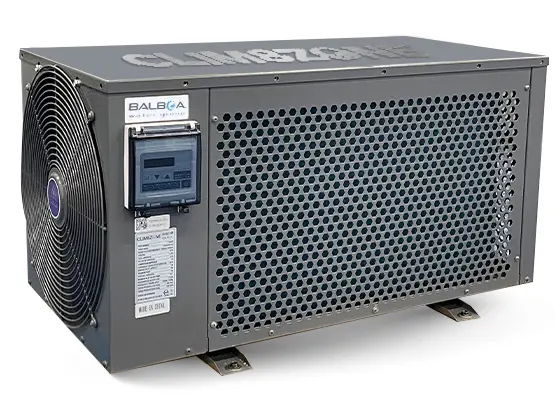
Instead of turning electricity directly into heat, an air-source heat pump moves heat from outdoor air into the water. The Clim8Zone system can also reverse that process to cool the water. Cooling uses electricity too; the savings calculator below compares heating only.
Snorkel pairs the heat pump with compatible electric Power Pak controls. The electric resistance heater remains available for faster heat-up or supplemental heat. Integration with an existing tub depends on its controls, plumbing and electrical supply; an older system may need more than an added heat pump.
Clim8Zone controls and operating modes
The original Clim8Zone provides Auto Smart, Manual High and Manual Low. Auto Smart adjusts compressor speed as air and water temperatures change. Manual High prioritizes output and faster heating or cooling; Manual Low prioritizes efficiency at lower output. The modes available depend on the model and control software.
Temperature controls offer Heat Only, Cool Only, Heat and Cool, or Disabled. Cool Only disables heating, so confirm the selected mode before expecting the tub to warm up. Compatible controls can use the heat pump, electric resistance heater, or both. Using both can speed heating, but the electric element reduces the overall efficiency advantage.
Manufacturer limits are model-specific: Balboa lists a minimum ambient operating temperature of −4°F for Clim8Zone I and 23°F for Clim8Zone II. These are operating limits, not promises of heating output or savings at those temperatures. We will confirm the model and configuration for your project.
Cold-weather operation is not the same as cold-weather efficiency
Heat pumps are generally less effective as the outdoor air gets colder. Heating output and efficiency decline, and defrost cycles can interrupt heating. At the same time, a hot tub usually loses more heat to colder air. A unit that can operate at a low ambient temperature is not necessarily delivering its advertised warm-weather efficiency at that temperature.
Local winter temperatures, your water-temperature setting and the amount of resistance backup all matter. A mild-climate installation should not be used to promise the same savings in a colder location. An insulated cover, wind exposure, uncovered soaking time and how often you refill or reheat the tub also affect the heating demand.
What determines the payoff?
- Equipment cost. Compare complete, compatible heating packages—not the price of a heat pump by itself. Include controls and other equipment that differ between the alternatives.
- Installation complexity. A heat pump needs a suitable outdoor location, clear airflow, service access, extra plumbing and the right electrical connections. Depending on your site and existing equipment, installation or upgrades can erase a small operating-cost saving.
- Electricity and fuel rates. Include electricity supply and delivery charges. For gas, use the delivered per-therm rate. Fixed charges that would stay the same do not belong in the comparison. Time-of-use periods and higher usage tiers can make added hot tub energy more expensive than the average shown on a bill.
- Climate and ambient temperatures. Seasonal efficiency is more useful than a best-case brochure rating. Cold weather, high target water temperatures and defrost can reduce savings.
- Usage and recovery speed. Maintaining a covered tub at temperature is different from repeatedly heating a cold fill. Running the resistance heater for quick recovery increases electricity use. Compare speed as well as operating cost.
- Maintenance and years of use. Allow for any extra annual servicing costs. Simple payback does not include financing, future repairs, equipment replacement or changes in utility rates.
Understanding COP
Coefficient of performance (COP) compares heat delivered with electricity used. A COP of 4 means the heat pump delivers four units of heat for each unit of electricity at the stated conditions. COP changes with air temperature, water temperature and operating mode. A headline COP is not a guaranteed year-round value.
For a fair comparison, use the same useful heating demand for both alternatives and include the share supplied by resistance backup. If the heat pump costs more to operate under your assumptions, the calculator shows no operating-cost payback rather than presenting a misleading payoff period.
Heat pump operating-cost & payoff calculator
Compare the same annual heating demand using a heat pump and either natural gas or resistance electric heat. The calculation follows the utility-rate comparison we use for individual projects. It does not read your uploaded bill automatically.
The starting heating demand, COP and gas efficiency below are illustrative assumptions, not a forecast for your tub. Enter your rates and the difference in quoted equipment and installation costs. Try lower and higher COP values to see how sensitive the result is.
How the calculator works
Useful heat is the heat delivered to the water. Gas cost = useful BTU ÷ (100,000 × heater efficiency) × dollars per therm. Electric resistance cost = useful BTU ÷ 3,412 × dollars per kWh. Heat pump electricity = useful BTU ÷ 3,412 × [backup share + (1 − backup share) ÷ seasonal COP], plus any extra circulation energy you enter. Simple payback = extra installed cost ÷ annual savings after extra maintenance.
Use consistent annual assumptions. Colder periods often have both greater heat loss and lower heat pump efficiency. A simple annual model cannot predict your daily weather, defrost cycles, peak rates, heating capacity or recovery time.
Send your utility bill for a project-specific comparison
Upload a recent electricity bill and, if you are comparing natural gas, include the gas bill too. A PDF with both statements works well. Enter your email and we will review the rates and your project, then get back to you.
Please redact account numbers, payment information and other details we do not need. Leave the utility name, service area, rate plan, billing dates, energy use and supply/delivery charges visible. Your bill is for Snorkel's review and is not published on this website.
Before ordering
We will help confirm control compatibility, airflow and service access, plumbing requirements and the electrical work for your configuration. The unit needs an open outdoor location with clear airflow; do not bury it inside a closed tub surround or stair enclosure. Have your installer review the model-specific clearances, drainage, bonding and electrical requirements in the current instructions before planning the site.
Compare heating rates · Electric heating · Gas heating · Site preparation
Manufacturer references: Clim8Zone I · Clim8Zone II · Controls and modes. Follow the instructions for the exact supplied model.